Our take
For modest loads, choose on carry weight, the exact outlet requirements and the complete kit price. The 600 Plus is worth considering when your continuous load exceeds the v2’s limit; a longer trip usually calls for more battery capacity or a realistic recharge plan.
Research-based buying guide, not hands-on tested. Specifications and certification claims are attributed below; calculations are estimates. No paid placement or affiliate tracking links appear on this page.
600 v2 vs 600 Plus: similar energy, different output
Check the full suffix and regional label. These two models store almost the same energy, but have different continuous AC limits and carry weights.
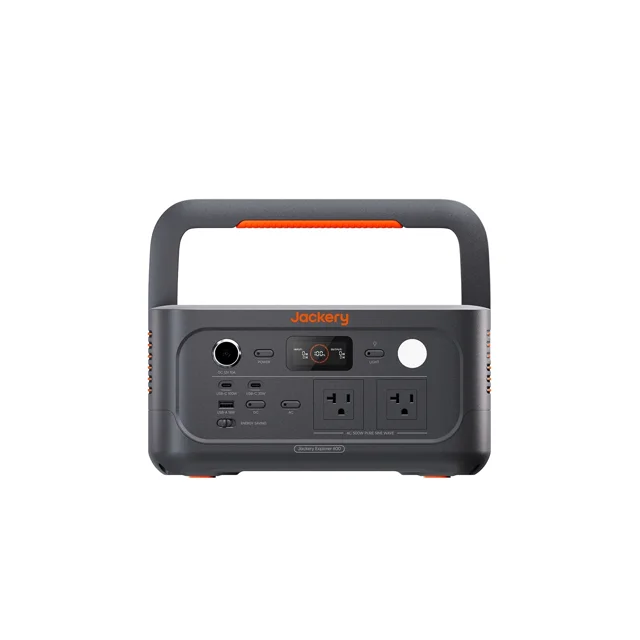
Jackery Explorer 600 v2
- Battery
- 640 Wh
- Continuous AC
- 500 W
- Weight
- 6.4 kg
Consider for: Modest campsite loads when lower carry weight matters.
Key limit: A 650 W continuous appliance exceeds its 500 W inverter rating.
Match JE-600A and 120 V AC output; the manual cover uses “Explorer 600”.
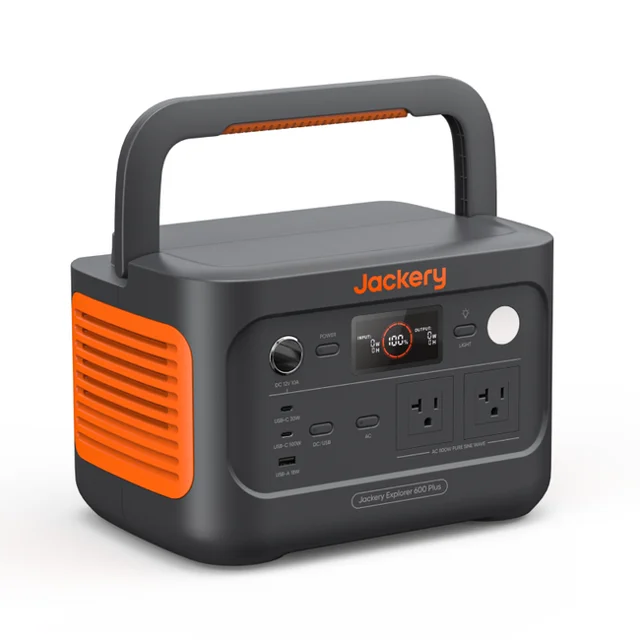
Jackery Explorer 600 Plus
- Battery (rounded)
- 632 Wh
- Continuous AC
- 800 W
- Weight
- 7.3 kg
Consider for: Loads above the v2’s 500 W limit, within the Plus’s 800 W rating.
Key limit: Almost the same battery energy as the v2, with more weight.
Find the Explorer 600 Plus U.S. manual. Jackery also provides this model’s manual in its app; the Australian 230 V manual is a different version.
Other specifications to check
| Specification | Explorer 600 v2 | Explorer 600 Plus |
|---|---|---|
| Published peak output | 1,000 W | 1,600 W |
| Battery chemistry | LiFePO4 | LiFePO4 |
| Maximum solar input | 200 W | 200 W |
Source: Jackery’s official 600 v2 / 600 Plus comparison. Peak output is not a continuous operating allowance; check surge duration and appliance compatibility in the manual.
Extra inverter power permits a larger compatible load; it does not add runtime to a low-power overnight load.
How long does the Jackery Explorer 600 last?
Use energy capacity for runtime and inverter watts for compatibility. Our shared calculation is capacity in Wh × 0.85 ÷ total load in W. The 0.85 factor combines usable capacity and conversion losses; it is a planning assumption, not a measured efficiency for these units.
Explorer 600 runtime
10.3 hours
Estimate only. Check startup surge and leave a backup reserve.
Formula & assumptions
Usable capacity factor 0.85 (composite: ~90% inverter efficiency folded in); device draw treated as constant. Runtime values are estimates — always confirm with your device’s official label. Not medical advice. DC adapters and low-load shutdown are not modeled.
| Example load | Draw | Explorer 600 v2 | Explorer 600 Plus |
|---|---|---|---|
| CPAP planning load, lower draw | 30 W | 18.1 h | 17.9 h |
| CPAP planning load, higher draw | 53 W | 10.3 h | 10.1 h |
| Laptop + small light | 65 W | 8.4 h | 8.3 h |
| Continuous appliance load | 100 W | 5.4 h | 5.4 h |
| Higher continuous load | 300 W | 1.8 h | 1.8 h |
Calculated from the capacities above using our runtime model. Loads are planning examples, not claims about every CPAP, laptop or refrigerator. Temperature, inverter idle consumption, battery age and shutdown settings can change the result.
CPAP camping: plan the whole night, plus a reserve
For an eight-hour night at the example 53 W load, the device needs 424 Wh. Our model allows 544 Wh from the v2 or 537.2 Wh from the Plus before a separate reserve. That makes one night plausible on paper, with less room for other devices or unexpected demand.
Two eight-hour nights at that same load require about 998 Wh of nominal capacity under this model. Neither 600 model reaches that without recharging. At a lower measured draw your result may change; use the calculator with the consumption of your own setup.
- Confirm the CPAP manufacturer’s approved power supply or DC adapter, including voltage and connector compatibility.
- Account for the prescribed humidifier and heated-tube settings. Do not change therapy settings to fit a battery estimate.
- Check low-load shutdown behavior and carry a backup plan agreed with your equipment provider. An energy estimate does not establish medical-device suitability.
See our CPAP camping power guide for more setup considerations.
A camping budget is more useful than a device list
| Device | Use | Energy |
|---|---|---|
| Laptop | 45 W × 3 h | 135 Wh |
| Light | 10 W × 4 h | 40 Wh |
| Fan | 30 W × 6 h | 180 Wh |
| Total | Before conversion allowance | 355 Wh |
That needs about 418 Wh nominal at our 0.85 factor. Add eight hours of the example 53 W CPAP load and the requirement becomes 917 Wh, exceeding either battery. Sum your setup in the size calculator.
For a refrigerator, distinguish the compressor’s running power from its average over a full day. A lower average can extend runtime, while startup can still overload the inverter. The refrigerator sizing guide explains that distinction.
Solar charging: budget for usable daylight
A panel’s nameplate wattage is not the energy it will deliver at camp. As an illustrative budget, 200 W × four peak-sun-hours × 0.8 system efficiency yields 640 Wh per day. Those hours and that efficiency are assumptions; shade, orientation and weather can reduce the result considerably.
That example is enough to show why a recharge plan matters, but it does not promise a full refill or cover devices running during charging. Verify the exact input voltage and current range before connecting a panel, and keep a non-solar backup when the load is essential.
What to check before buying
- Exact suffix and region. Match the listing, model label, AC voltage and warranty territory.
- Continuous draw and startup. Compare both with the exact model, including simultaneous loads.
- Complete kit cost. Include panels, cables, approved adapters and shipping. A station-only deal and a solar bundle are different purchases.
- Energy over the whole trip. If you need substantially more runtime, compare a larger battery before paying for extra inverter output.
- Seller and return terms. Verify new versus refurbished condition, authorized support and the return window.
Check Jackery’s current models & specifications
Official reference link, without affiliate tracking. Prices, promotions and stock are checked at the seller; no live price is represented here.
Sources & methodology
Checked 2026-10-31. We compared manufacturer specifications and calculated the examples with the same engine used by our tools. We have not independently measured these stations’ output, noise, charging speed or runtime.
- Jackery: Explorer 600 v2 product page and 600 Plus comparison — capacity, output, weight, chemistry and solar input. The old U.S. 600 Plus product URL redirected to this page when checked.
- PowerDeck runtime calculator — constant-load estimate and the composite 0.85 assumption.
Frequently asked questions
Is the Jackery Explorer 600 a 600-watt power station?
The name alone does not establish output. Jackery lists the Explorer 600 v2 at 640 Wh and 500 W continuous AC output, and the Explorer 600 Plus at 632 Wh and 800 W. Check the full model name and regional specification before buying.
How long will a Jackery Explorer 600 run a CPAP?
At an illustrative constant 53 W AC load, our capacity × 0.85 ÷ watts model gives about 10.3 hours for the 600 v2 and 10.1 hours for the 600 Plus. These are estimates without a separate reserve, not measured CPAP runtimes. Confirm your machine, approved adapter and backup plan with your equipment provider.
Can the Explorer 600 run a refrigerator?
It depends on running draw, startup surge and the exact station. At a hypothetical constant 100 W, estimated runtime is 5.4 hours for either model. A cycling fridge can use a different average load, but startup demand may still exceed the inverter. Measure your fridge over a representative period.
Can I use a solar panel with the Explorer 600?
Jackery lists up to 200 W solar input for both models. Check the exact unit’s manual for permitted panel voltage, current, connector and polarity. A 200 W panel rating is not a promise of 200 W delivered throughout the day.
Which should I choose: Explorer 600 v2 or 600 Plus?
Choose based on your load before comparing price. The v2 is lighter in Jackery’s comparison; the Plus has a higher continuous AC limit. Their battery capacities are close enough that the extra inverter power does not create a meaningful runtime advantage.