Our take
Start around 2 kWh for the illustrative full-day essentials budget below. Compare the Anker SOLIX C2000 Gen 2 for its 800 W solar input and 2400 W inverter, or the Jackery Explorer 2000 v2 if 400 W solar input fits your recovery plan. The 1024 Wh EcoFlow DELTA 3 suits smaller loads or shorter outages. None is an automatic whole-house solution.
Research-based buying guide, not hands-on tested. Specifications and certification claims are attributed below; calculations are estimates. No paid placement or affiliate tracking links appear on this page.
Our shortlist: three different backup fits
A smaller 1 kWh option and two roughly 2 kWh options, selected from published U.S. specifications. Match energy, output and solar recovery to your outage plan.
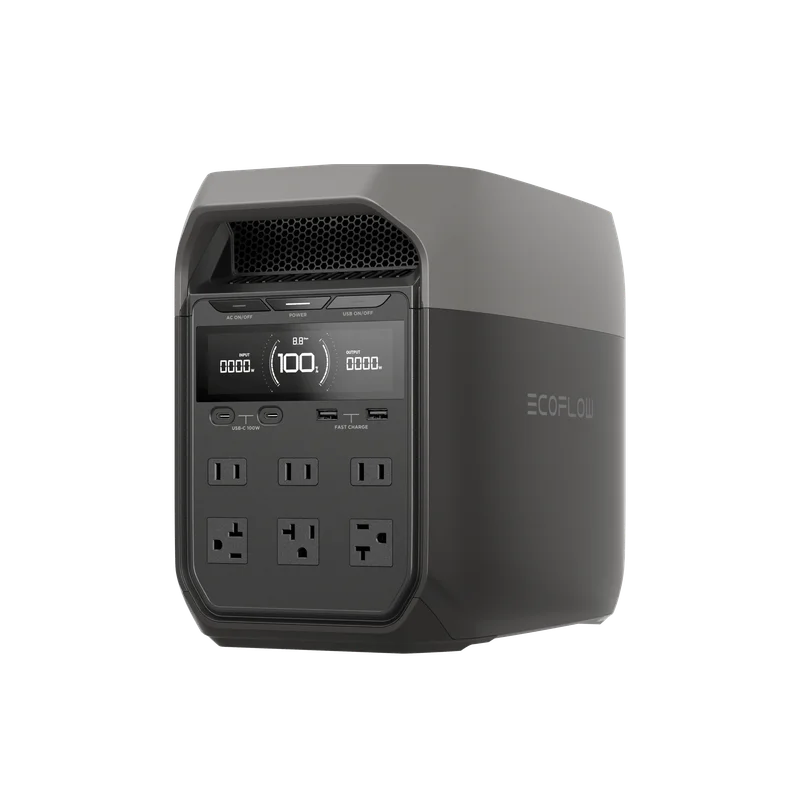
EcoFlow DELTA 3
- Battery
- 1,024 Wh
- Continuous AC
- 1,800 W
- Weight
- 12.5 kg
Consider for: Short outages and a smaller essential-load budget.
Key limit: Its base battery does not cover our full-day home-backup example without recharging.
Standard DELTA 3, not Plus, Classic or 1500. Use the U.S. electrical specifications.
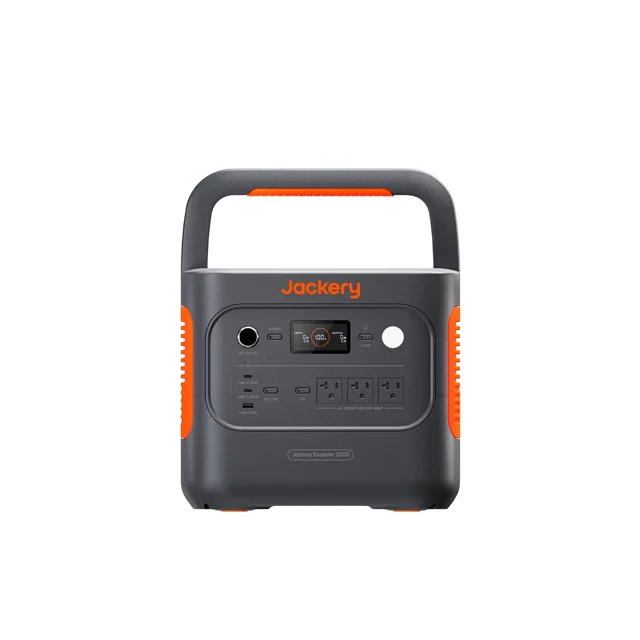
Jackery Explorer 2000 v2
- Battery
- 2,042 Wh
- Continuous AC
- 2,200 W
- Max solar input
- 400 W
Consider for: A roughly 2 kWh plug-in backup with modest solar input.
Key limit: The 400 W solar ceiling can constrain recovery after a long outage day.
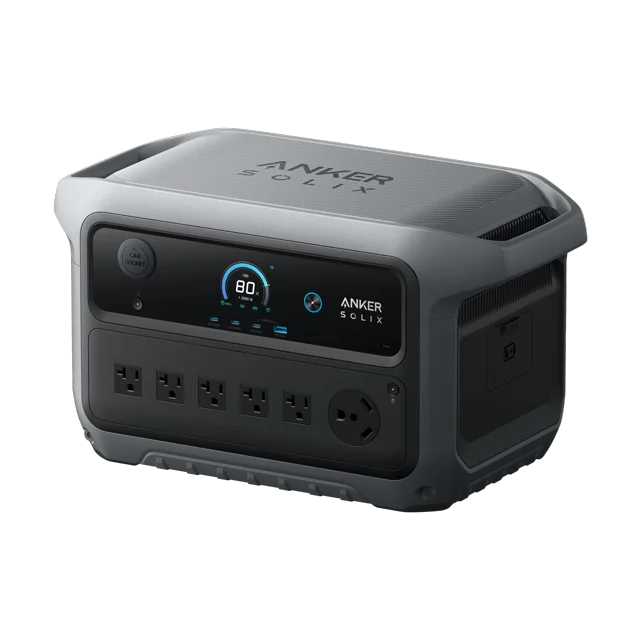
Anker SOLIX C2000 Gen 2
- Battery
- 2,048 Wh
- Continuous AC
- 2,400 W
- Max solar input
- 800 W
Consider for: A 2 kWh-class backup with higher output and solar input.
Key limit: U.S. bypass output is limited to 1800 W; the 2400 W rating applies in inverter mode.
Specifications at a glance
| Model | Capacity | Continuous AC | Max solar input |
|---|---|---|---|
| EcoFlow DELTA 3 | 1,024 Wh | 1,800 W | 500 W |
| Jackery Explorer 2000 v2 | 2,042 Wh | 2,200 W | 400 W |
| Anker SOLIX C2000 Gen 2 | 2,048 Wh | 2,400 W | 800 W |
Continuous AC ratings exclude boost modes and brief surge ratings. Photos identify the stations; solar panels and other accessories depend on the bundle.
Size the battery around the essentials you will actually use
Wh sets runtime; W sets load compatibility. Add daily energy, then check simultaneous power and startup demand separately.
| Essential | Assumption | Daily energy |
|---|---|---|
| Refrigerator | Example measured daily total | 900 Wh |
| Router | 12 W × 24 h | 288 Wh |
| LED light | 10 W × 5 h | 50 Wh |
| Phone charging | Example daily allowance | 30 Wh |
| Total | Before battery conversion allowance | 1,268 Wh |
At our 0.85 usable-energy factor, plus a chosen 20% energy allowance: 1791 Wh for one day or 3581 Wh for two days without recharging. Both 2 kWh stations meet the one-day energy target; the base DELTA 3 does not. Startup compatibility still needs checking.
Backup battery size
1,791 Wh
Estimated nominal capacity · check inverter and startup ratings.
Formula & assumptions
Daily Wh × days × (1 + extra allowance ÷ 100) ÷ 0.85. The 0.85 usable-energy factor includes conversion losses. Extra allowance is added energy, not a reserved state-of-charge percentage. Solar recharging, idle power and temperature are not modeled.
Measure your own loads with an appropriately rated electricity monitor. A fridge compressor cycles, and a hot kitchen or frequent door opening changes its consumption. Virginia Cooperative Extension’s appliance-energy worksheet explains nameplate power, time of use and daily kWh. See our home backup planning guide for the wider appliance checklist.
How much runtime does each battery buy?
The following estimates isolate battery size: nominal Wh × 0.85 ÷ constant watts. They assume a full battery, no recharge and no separate reserve. Real low-load inverter overhead, temperature, battery age and shutdown settings can change the result.
| Model | 100 W total | 300 W total | 500 W total |
|---|---|---|---|
| EcoFlow DELTA 3 | 8.7 h | 2.9 h | 1.7 h |
| Jackery Explorer 2000 v2 | 17.4 h | 5.8 h | 3.5 h |
| Anker SOLIX C2000 Gen 2 | 17.4 h | 5.8 h | 3.5 h |
Nearly equal Wh gives nearly equal modeled runtime. More inverter watts does not add stored energy. Enter your measured load in the runtime calculator.
A solar panel for home backup power must replace daily energy
Panels and cables may be sold separately. Four illustrative peak-sun-hours at 80% system yield produce the following energy; weather and shade can reduce it.
Barely covers our 1268 Wh daily example.
Needs a compatible station and suitable sun.
- Check the manual: panel open-circuit voltage at the lowest expected temperature, current, connectors and polarity—not just watts.
- Allow for poor weather: plan stored energy or another supported charging source when solar harvest is low.
- Count concurrent use: recovering yesterday’s discharge while supplying today’s loads needs extra energy.
Plug-in essentials and whole-home backup are different purchases
The shortlist is for compatible appliances plugged into the station’s outlets. A station that runs several 120 V devices is not automatically suitable for a 240 V well pump, central air conditioner or electric range. Even an appropriate outlet or adapter does not increase the inverter’s rating.
For household circuits, have a qualified electrician design the manufacturer-supported transfer equipment and installation. Never energize house wiring through a wall outlet. The Utah Emergency Management generator-safety guidance explains backfeeding and transfer-switch requirements. Fuel generators produce carbon monoxide and must operate outdoors away from openings; a battery station is a different device, with its own dry-location and ventilation requirements.
Automatic switchover, power restoration after a shutdown and pass-through output are separate checks. For example, Anker’s U.S. guide distinguishes 2400 W inverter output from an 1800 W bypass limit. Do not assume a UPS/EPS label guarantees compatibility with medical equipment or uninterrupted operation.
Compare the complete backup kit before paying
- Battery target: outage Wh plus an explicit margin, with no promised sunshine needed to make the first night work.
- Load compatibility: total simultaneous watts, startup demand, outlet voltage and low-load shutdown behavior.
- Recovery: actual panel count, input limits, cables, outdoor placement and a poor-weather charging plan.
- Full cost: battery, panels, expansion batteries, delivery and any installed transfer equipment. Compare matching bundles.
- Support: regional warranty, authorized seller, return terms and maintenance instructions. Current prices and availability belong at the seller.
If your main requirement is a few hours of router and laptop backup, the smaller option may make sense. If it is a full day of refrigeration and essentials, begin with the 2 kWh comparison. If it is two days, heavy pumps or whole-home circuits, calculate the larger system before choosing a portable kit.
Sources & methodology
Sources checked 2026-11-01. We compared exact U.S. model specifications and calculated the examples with PowerDeck’s shared 0.85 usable-energy factor. The shortlist is not exhaustive. We have not independently evaluated charging speed, noise, startup performance or long-term durability. No live prices or independent test scores are represented.
- EcoFlow: DELTA 3 U.S. specifications — base capacity, continuous output and solar-input ceiling.
- Jackery: Explorer 2000 v2 U.S. specifications — energy, output and charging limits.
- Anker: SOLIX C2000 Gen 2 U.S. user guide — capacity, inverter/bypass output and solar input.
- Virginia Cooperative Extension: appliance-energy calculation worksheet — measurement and Wh/kWh method.
- Utah Emergency Management: generator safety — household connections and fuel-generator precautions.
Frequently asked questions
What are the best solar generators for home backup power?
For a smaller, short-outage load, consider the EcoFlow DELTA 3. For roughly 2 kWh of plug-in backup, compare the Jackery Explorer 2000 v2 with the Anker SOLIX C2000 Gen 2. The Anker has higher published continuous output and solar input; the Jackery has a lower solar-input ceiling. These recommendations follow manufacturer specifications. Your energy budget, startup load and connection method decide whether any of them fits.
Is a 2000 Wh solar generator enough for home backup?
It can cover selected essentials, not an entire home by default. Our illustrative fridge, router, lights and phone budget is 1268 Wh per day. With a 0.85 usable-energy factor and a 20% extra energy allowance, that needs 1791 Wh nominal capacity for one day, or 3581 Wh for two days without recharging. Heating, cooking, pumps and air conditioning change the answer.
Will a solar generator run a refrigerator during a power outage?
Only if its continuous and startup output suit the refrigerator and its battery holds enough energy. Measure refrigerator Wh over a representative day. A hypothetical steady 100 W load gets about 17.4 hours from a 2048 Wh battery with our 0.85 factor, but a real cycling refrigerator does not draw 100 W constantly.
Can a portable solar generator power my whole house?
The three portable systems discussed here are selected-load, 120 V options. Whole-home service, 240 V appliances and automatic circuit backup require compatible equipment, proper load sizing and a qualified installer. Never connect a station to a wall outlet to energize house wiring.
How much solar is needed for home backup power?
Start with the energy you must replace each day. In an illustrative four-peak-sun-hour day at 80% solar-system yield, a 400 W array yields 1280 Wh, before any demand not included in that budget. Weather and shade can reduce this. Check the station’s input ceiling, panel open-circuit voltage, current and connectors; array watts alone do not establish compatibility.